
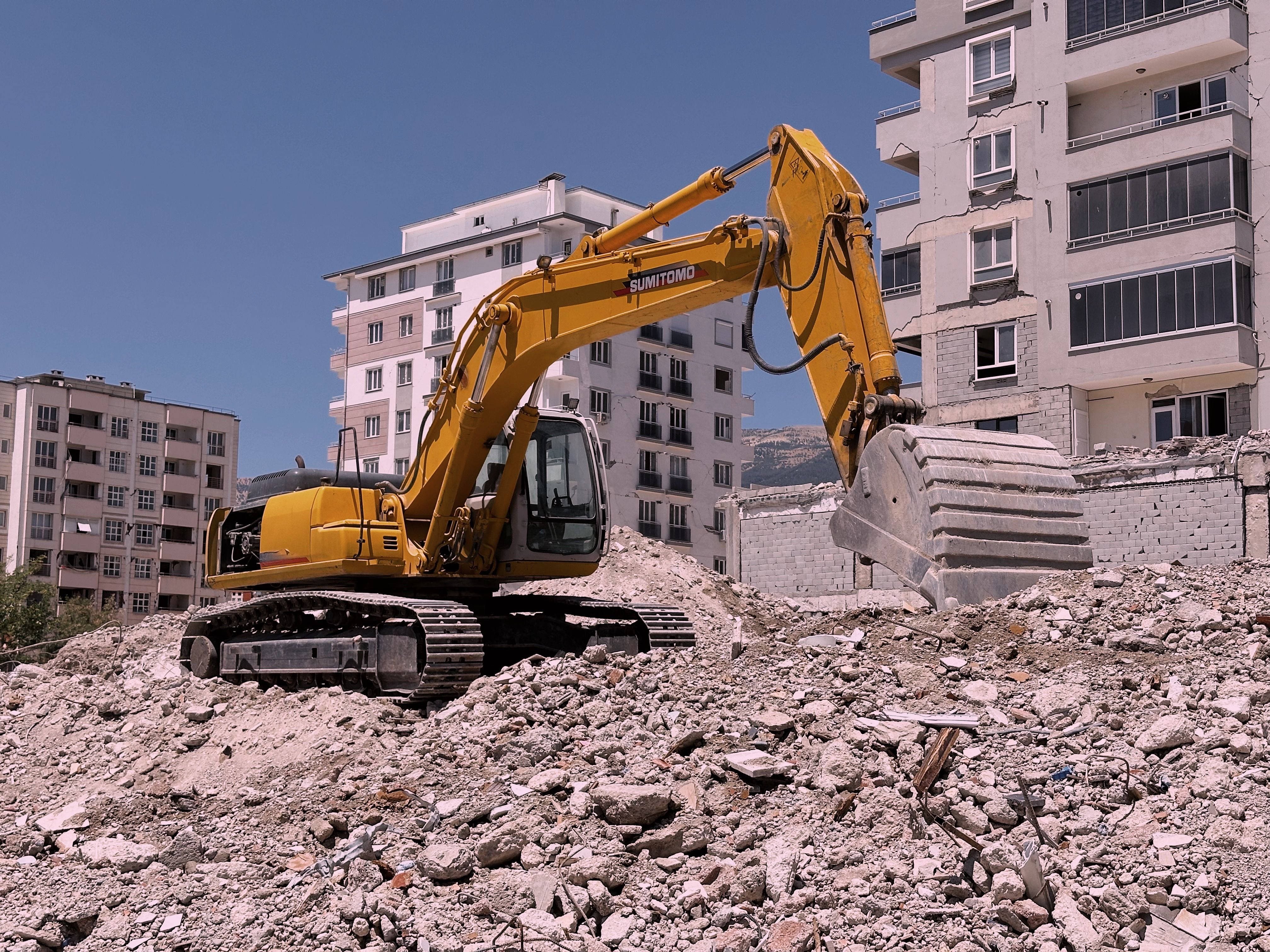
Wars do not end when a ceasefire is declared. In many cases, the most expensive phase begins only after the fighting stops: rebuilding what years of conflict have destroyed. Syria illustrates the scale of this challenge. In its Syria Physical Damage and Reconstruction Assessment (2011-2024), the World Bank estimates that the cost of reconstructing damaged physical assets ranges between $140 billion and $345 billion, with a central estimate of $216 billion, equivalent to nearly ten times Syria's GDP in 2024.
When reconstruction costs reach this magnitude, they exceed the capacity of most post-conflict states. Their economies are often devastated, government revenues severely constrained, and public finances too weak to support large-scale reconstruction. As a result, foreign aid, grants, investment, and international financing become essential for rebuilding cities, restoring economic activity, and re-establishing basic public services.
This raises an important question: who has financed the reconstruction of Arab countries after war? A review of the major conflicts in Lebanon, Gaza, Iraq, and Syria reveals a clear difference in how regional powers have approached the post-war period. While the Gulf states, to varying degrees, have focused on financing reconstruction, investing in infrastructure, and supporting economic recovery, Iran has concentrated primarily on providing military and political support to its regional allies, while playing a comparatively limited role in official civilian reconstruction programmes.
Lebanon After the 2006 War
The war between Israel and Hezbollah in the summer of 2006 caused extensive damage to Lebanon's infrastructure, housing, and public facilities. According to the World Bank and the Government of Lebanon, direct physical damage amounted to approximately $2.8 billion, while total economic losses were estimated at around $5.1 billion.
As reconstruction began, the Gulf states emerged as some of its largest financial backers. Saudi Arabia announced a $500 million reconstruction grant, in addition to a $1 billion deposit at the Banque du Liban to support financial stability. Kuwait provided a $300 million reconstruction grant alongside a $500 million deposit. Qatar financed the reconstruction of numerous villages in southern Lebanon, particularly Bint Jbeil and Khiam, at a cost of roughly $300 million. Meanwhile, the United Arab Emirates contributed more than $50 million to infrastructure rehabilitation and public reconstruction projects.
Iran, by contrast, contributed to the reconstruction of some war-affected areas, but largely through channels linked to Hezbollah rather than through Lebanon's official reconstruction programmes. Iranian support financed the Waad ("Promise") Project, implemented by Jihad al-Bina, to rebuild destroyed homes in Beirut's southern suburbs and parts of southern Lebanon. The programme focused primarily on areas with strong Hezbollah support. According to multiple reports, rebuilding Beirut's southern suburbs cost approximately $400 million. Part of this amount was covered through compensation provided by the Lebanese government, while Hezbollah, backed by Iranian funding, financed the remainder.
The distinction, therefore, lies less in the amount of money spent than in how it was allocated. Gulf assistance was directed primarily toward the Lebanese state, infrastructure projects, deposits at the central bank, and internationally coordinated donor initiatives. Iranian funding, in contrast, was concentrated on rebuilding areas associated with Hezbollah through its own institutions, while continuing to provide the group with military and financial support.
The Lebanese case highlights two different approaches to the post-war period. The Gulf states focused on supporting the Lebanese state by strengthening its financial stability and financing public reconstruction through grants, deposits, and government-led projects. Iran, on the other hand, concentrated on rebuilding Hezbollah's support base through affiliated institutions while maintaining its military and financial backing for the group. The difference, therefore, was not only the scale of spending, but also its beneficiaries and the types of assets it financed.
Gaza: The Largest Contributors to Reconstruction
Over the past two decades, the Gaza Strip has experienced multiple wars, each followed by international donor conferences aimed at mobilising the resources needed for reconstruction. In most of these conferences, the Gulf states ranked among the largest contributors.
At the International Conference in Support of the Palestinian Economy for the Reconstruction of Gaza, held in Sharm El-Sheikh in 2009 following the 2008-2009 war, the international community pledged approximately $4.48 billion. Saudi Arabia announced a $1 billion contribution, the largest single pledge made at the conference. Qatar pledged $250 million, while the United Arab Emirates committed $174 million.
A similar pattern emerged after the 2014 war. At the Cairo Conference on Palestine: Reconstructing Gaza, international pledges totalled approximately $5.4 billion, with around half earmarked for Gaza's reconstruction. Qatar pledged $1 billion, while both the United Arab Emirates and Kuwait committed $200 million each. Additional contributions from Arab and international donors were directed towards rebuilding housing, infrastructure, and essential public services.
By contrast, Iran continued to provide financial and military support to Palestinian armed groups, particularly Hamas and Palestinian Islamic Jihad, with its assistance focused primarily on strengthening their military capabilities. However, Iran was not among the principal contributors to the international reconstruction conferences and did not play a comparable role in financing the civilian reconstruction programmes implemented through the Palestinian Authority, the United Nations, or international financial institutions.
Iraq After the Defeat of ISIS
After Iraq regained control over most of the territory previously held by ISIS, the Iraqi government estimated the cost of reconstructing the war-affected areas at approximately $88.2 billion, including more than $45 billion needed to rebuild infrastructure and productive sectors. In response, Kuwait hosted the International Conference for the Reconstruction of Iraq in February 2018, jointly organised by the Government of Iraq, the United Nations, the World Bank, and the European Union.
During the conference, participating countries and international institutions pledged approximately $30 billion in loans, investments, and financial guarantees. The Gulf states were among the largest contributors. Saudi Arabia announced $1 billion for reconstruction projects, in addition to $500 million to finance Saudi exports to Iraq. Kuwait pledged $2 billion, consisting of $1 billion in loans and $1 billion in investments. The United Arab Emirates committed $500 million, while Qatar announced $1 billion in loans and investments.
By contrast, despite the extensive political and military influence Iran acquired in Iraq after 2003, particularly through its support for several armed groups, it was not among the leading contributors at the Kuwait Reconstruction Conference. Nor did it announce comparable programmes to finance the reconstruction of infrastructure or war-damaged cities. Instead, Iran's engagement remained focused primarily on security cooperation, trade relations, and support for allied political and military actors.
Syria: From War to Reconstruction
Syria offers the clearest example of the contrasting approaches adopted by regional powers. Since the outbreak of the civil war in 2011, Iran has devoted substantial resources to supporting the government of Bashar al-Assad through credit lines, military financing, and support for the Islamic Revolutionary Guard Corps (IRGC) and allied militias. Although estimates vary, studies by several international research institutions suggest that Iran's support amounted to tens of billions of dollars over the course of the conflict.
The war, meanwhile, left behind destruction on an unprecedented scale. In its Syria Physical Damage and Reconstruction Assessment (2011-2024), the World Bank estimates that the cost of rebuilding damaged physical assets ranges between $140 billion and $345 billion, with a central estimate of $216 billion, equivalent to nearly ten times Syria's GDP in 2024.
As Syria entered the recovery phase, the regional landscape began to shift. In 2025, Saudi Arabia and Qatar jointly cleared Syria's $15.5 million arrears to the World Bank, restoring the country's eligibility for World Bank financing for the first time in more than fourteen years and reopening access to funding for reconstruction and institutional reform projects.
Qatar also financed a $63.75 million initiative through the Qatar Fund for Development, in partnership with the United Nations Development Programme (UNDP), to supply Syrian power plants with natural gas. The project is expected to generate approximately 400 megawatts of additional electricity per day, improving power supply across several provinces.
At the same time, Gulf investment has gradually begun returning to the Syrian economy. In 2026, Kuwait's Zain Group was awarded a twenty-year licence to operate a new mobile telecommunications network, with direct and indirect investments expected to exceed $1.5 billion during its first seven years. Saudi Arabia's STC also announced the Silk Link digital infrastructure project in partnership with the Syrian Sovereign Fund, involving investments of SAR 3 billion to modernise Syria's fibre-optic network and strengthen its regional and international digital connectivity.
Regardless of the political or economic motivations behind these initiatives, the comparison reveals a clear difference in the nature of regional spending. During the war, a substantial share of Iran's resources was directed towards supporting the Syrian government and its allied militias. By contrast, Gulf initiatives in the post-war period have focused on financing economic recovery, rebuilding infrastructure, attracting investment, and reintegrating Syria into the regional and international economy.
Evolution of combined Gulf reconstruction pledges by conflict, 2006–2018
Saudi Arabia + Kuwait + Qatar + UAE combined pledges per conflict, USD billion
Author's calculation, summing the country-level pledges reported for each conflict earlier in this article (grants and deposits/loans combined). Underlying figures: World Bank, Lebanon Economic Impact Assessment of the July 2006 War (2007); UN, International Conference in Support of the Palestinian Economy for the Reconstruction of Gaza (2009) and Cairo Conference on Palestine: Reconstructing Gaza (2014); Government of Kuwait, Kuwait International Conference for Reconstruction of Iraq (2018).
Reconstruction needs vs. funds mobilised so far — Iraq and Syria
USD billion; Syria figure reflects funds mobilised as of the initiatives cited in this article, not a complete accounting
Iraq: Government of Iraq cost estimate ($88.2bn) vs. pledges at the 2018 Kuwait International Conference for Reconstruction of Iraq ($30bn). Syria: World Bank Syria Physical Damage and Reconstruction Assessment (2011–2024) central estimate ($216bn) vs. author's sum of the funds mobilised so far as reported in this article — the Saudi/Qatar clearance of Syria's $15.5 million World Bank arrears, the Qatar Fund for Development's $63.75 million energy initiative, Zain Group's up to $1.5 billion telecoms investment, and STC's SAR 3 billion (≈ $0.8 billion) Silk Link project. This is necessarily a partial snapshot, not an official tally of all reconstruction financing to date.
Cumulative Gulf reconstruction pledges by country, across all four conflicts
Sum of pledges to Lebanon (2006), Gaza (2009 and 2014), and Iraq (2018), USD billion
Author's calculation, summing each country's pledges across the four conflicts discussed in this article, from the same sources as the chart above. Excludes the more recent, still-unfolding Syria investments, which are not yet fully comparable in scale or structure.
Conclusion
No country provides foreign assistance free of strategic interests, whether it is the Gulf states, Iran, or any other regional power. Foreign aid and investment, like military support, remain instruments for advancing influence and protecting national interests.
However, when assessing the long-term impact of these policies, the most important question is: what has this influence left behind once the war is over?
Schools, hospitals, power plants, water networks, roads, ports, and telecommunications infrastructure are productive assets that strengthen an economy's long-term capacity. They create jobs, improve living standards, and support economic growth for decades. Military assistance, regardless of its political or security objectives, cannot substitute for development, nor can it rebuild a destroyed city or restore a collapsed electricity grid.
The cases of Lebanon, Gaza, Iraq, and Syria reveal a recurring pattern. To varying degrees, the Gulf states have concentrated on financing reconstruction, investing in infrastructure, and supporting post-war economic recovery. Iran, by contrast, has devoted a larger share of its resources to supporting allied governments and armed groups. Political interpretations of these approaches will inevitably differ. From an economic perspective, however, the benchmark is more straightforward: regional influence should be measured not only by who prevailed on the battlefield, but also by who contributed to rebuilding peace.
This article was originally written in Arabic. The English translation was produced partially with the help of AI.