
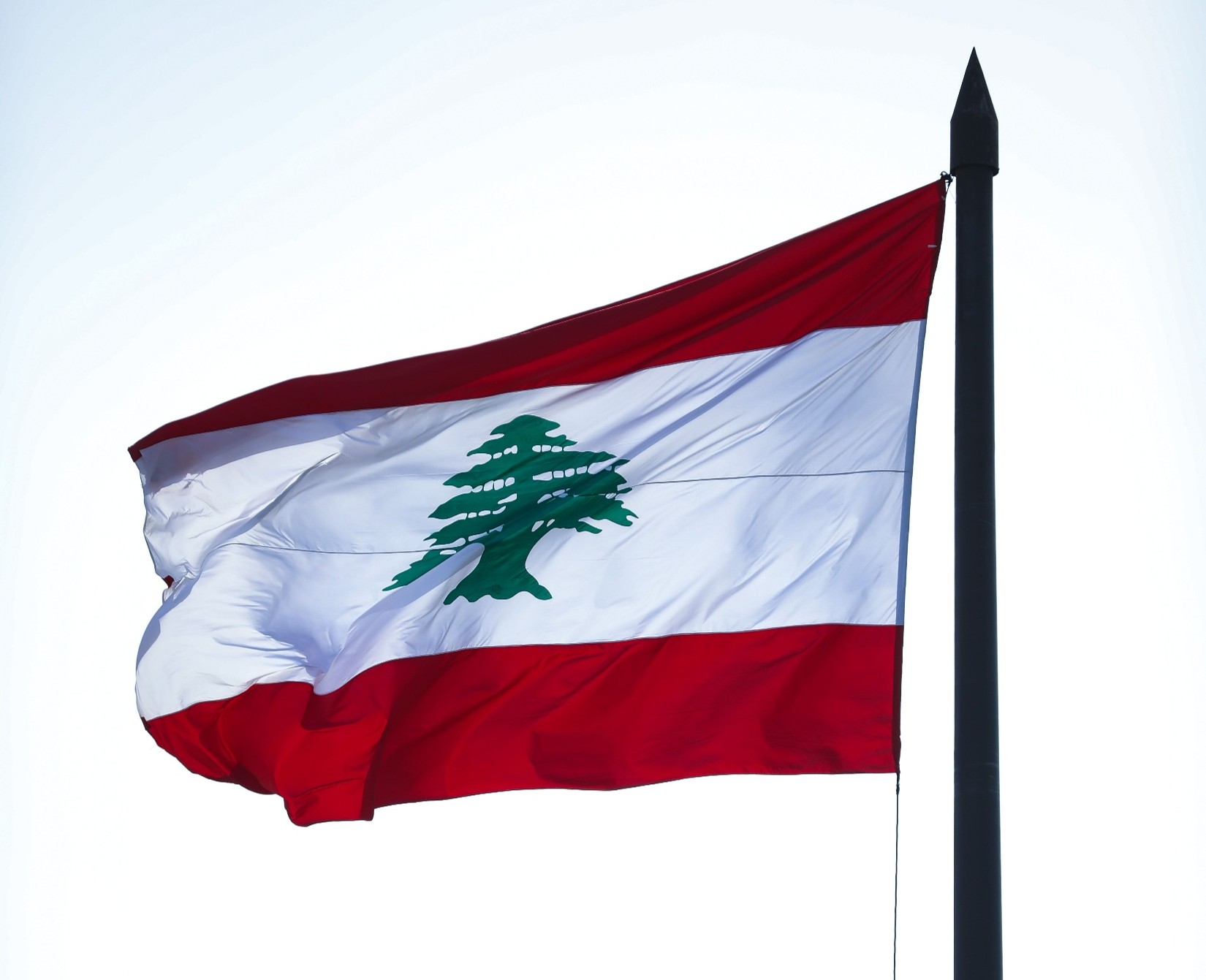
While browsing the World Bank's data on the evolution of GDP across Arab countries, I happened to come across Lebanon. I was surprised to discover that the country's GDP in 2025 was almost identical to what it had been in 2005.
At first, it seemed difficult to believe. How could an economy spend twenty years only to return to almost the same point where it had started? That single figure prompted me to dig deeper into the data and the economic literature to understand what had happened over those two decades.
What I found was not simply the story of a financial crisis or a single war. It was the story of an economy gradually weakened by wars, political divisions, political assassinations, regional interventions, mounting fiscal and financial imbalances, the collapse of its banking sector, the COVID-19 pandemic, and the Beirut Port explosion, ultimately losing nearly two decades of economic growth.
This article attempts to tell that story from an economic perspective. Drawing on data from the World Bank, the International Monetary Fund, reports by international institutions, and the work of Lebanese economists and researchers, it seeks to answer a simple question: How did Lebanon lose twenty years of economic development?
Twenty Years of Lost Growth
In economics, the cost of conflict extends far beyond the destruction of buildings and infrastructure. It also includes what economists refer to as "lost growth": the output, wealth, and employment opportunities that would have been created had the economy continued to grow under normal conditions.
An economy growing at an average annual rate of 3% roughly doubles in size every twenty-four years. If, instead, it remains at virtually the same size over that period, the country has not only lost what was physically destroyed, but also the additional wealth, income, and productive capacity that could have been generated over two decades.
This is precisely what makes Lebanon's experience so remarkable. According to data from the World Bank and the International Monetary Fund, Lebanon's GDP in 2025 was close to its level in 2005. In other words, the country did not merely lose years of economic growth. It also lost the cumulative benefits that sustained growth would have generated, including higher incomes, greater employment, stronger public revenues, increased investment, and higher productivity.
The central question, therefore, is not simply why Lebanon's economy declined. It is how an entire country managed to lose twenty years without any meaningful increase in the size of its economy.
How Did Lebanon Lose Twenty Years of Growth?
To understand how Lebanon's economy in 2025 returned to roughly the size it had in 2005, it is not enough to look only at the financial crisis that erupted in 2019. The collapse was not a sudden event, but the culmination of two decades of accumulated political, security, and economic shocks.
Beginning in 2005, Lebanon entered a prolonged period of instability. The assassination of former Prime Minister Rafic Hariri triggered a severe political crisis, followed by the withdrawal of Syrian troops after nearly three decades of military presence in the country. Just one year later, the July 2006 war between Israel and Hezbollah inflicted extensive damage. According to the World Bank and the Government of Lebanon, direct physical damage amounted to approximately $2.8 billion, while total economic losses were estimated at around $5.1 billion.
Yet this was only the beginning of a prolonged period of uncertainty. The war was followed by years of political deadlock, mass protests, government paralysis, and declining investor confidence. These developments directly affected private investment, tourism, and capital inflows, three sectors that had long been pillars of the Lebanese economy.
Timeline: the shocks behind two lost decades
Major political, security and economic shocks discussed in this article, 2005–2020
Author's summary of the events discussed in this article; see the References section for the underlying World Bank, IMF and UNHCR reports on each event.
2011: A Turning Point
If the 2006 war dealt a severe blow to Lebanon's economy, 2011 marked an even deeper turning point. With the outbreak of the Syrian civil war, Lebanon entered a new phase in which domestic challenges became increasingly intertwined with regional instability.
From an economic perspective, Syria was more than just a neighbouring country. It served as Lebanon's principal overland trade route to Arab markets, particularly the Gulf states. As the conflict escalated, key transport corridors were disrupted, shipping costs increased, and Lebanese exports to several traditional markets declined.
At the same time, Lebanon received an unprecedented influx of Syrian refugees. According to the World Bank, Lebanon became the country hosting the largest number of refugees relative to its population anywhere in the world. This placed growing pressure on public finances, infrastructure, healthcare, education, and the labour market. In its report, Lebanon: Economic and Social Impact Assessment of the Syrian Conflict, the World Bank concluded that the Syrian conflict imposed substantial economic costs on Lebanon, significantly reduced economic growth, and contributed to rising unemployment and poverty.
The situation became even more complex when Hezbollah entered the Syrian conflict in 2013 in support of the government of Bashar al-Assad. Regardless of one's political assessment of this intervention, its economic consequences were difficult to ignore. Geopolitical risk increased, investor confidence weakened, and Lebanon's relations with several Gulf countries entered periods of tension, affecting tourism, investment, travel, and, to some extent, the economic prospects of Lebanese workers across the region.
As a result, Lebanon's difficulties could no longer be explained solely by domestic factors. The country's economy had become increasingly exposed to regional instability, weakening its growth drivers at a time when fiscal and monetary imbalances were already accumulating without meaningful structural reforms.
Years of Weak Growth Before the Collapse
By the middle of the 2010s, Lebanon's economy had not yet collapsed, but it was steadily losing its capacity for growth. Between 2011 and 2018, economic activity slowed markedly compared with the previous decade, while fiscal and financial imbalances continued to widen.
In its regular assessments of the Lebanese economy, the World Bank argued that weak growth could not be attributed to a single factor. Rather, it reflected the combined effects of persistent political uncertainty, declining private investment, lower capital inflows, a contraction in tourism, disruptions to trade caused by the Syrian conflict, and the continued delay of fiscal and structural reforms.
At the same time, public finances continued to deteriorate. Public debt gradually rose to one of the highest levels in the world relative to GDP, while successive governments continued to run large fiscal deficits without implementing meaningful structural reforms in key sectors such as electricity, public administration, and public finance.
Throughout these years, international institutions, including the International Monetary Fund and the World Bank, repeatedly warned that Lebanon's economic model had become increasingly fragile. They argued that continued reliance on capital inflows and the banking sector to finance government spending could not be sustained indefinitely without comprehensive economic reforms.
2019: The Collapse of Lebanon's Financial System
In the autumn of 2019, the crisis that international institutions had warned about for years finally erupted. After decades of dependence on public borrowing, deposit inflows, and monetary policies designed to maintain the Lebanese pound's peg to the US dollar, Lebanon's economic model reached its limits.
The banking sector stood at the centre of this model. Lebanese banks attracted hundreds of billions of dollars in deposits from residents and the Lebanese diaspora by offering high interest rates and maintaining public confidence. A significant share of these funds was then channelled by the Banque du Liban to finance government deficits and preserve the exchange-rate peg.
As capital inflows slowed and confidence began to erode, however, the system became increasingly unsustainable. By late 2019, commercial banks imposed informal restrictions on cash withdrawals and international transfers without any formal capital control legislation, effectively trapping the savings of millions of depositors.
The World Bank described Lebanon's crisis as one of the most severe financial and economic crises globally since the mid-nineteenth century. At the same time, the International Monetary Fund argued that resolving the crisis would require a comprehensive restructuring of the banking sector, fundamental fiscal reforms, and a fair and transparent allocation of financial losses.
As the financial system unravelled, the Lebanese pound lost most of its value, inflation surged to unprecedented levels, poverty increased dramatically, and households experienced a sharp decline in purchasing power. Lebanon was no longer facing a conventional economic recession. It had entered a systemic crisis that simultaneously affected its financial system, national currency, banking sector, and public finances.
The Lebanese pound's collapse against the US dollar (log scale)
LBP per USD at key milestones, 1997–2026 — note the logarithmic scale, needed because the currency lost more than 98% of its value
Source: Banque du Liban; parallel-market rates as reported by Reuters and AFP and compiled in L'Orient Today, "In memorium: Lebanon's two-decade lira peg" (2024), and Baz, "Lebanon: From Dollars to Lollars," International Finance (2025). The peg held at 1,507.5 LBP/USD from 1997 to October 2019; the rate was formally unified at 89,500 LBP/USD in February 2024.
2020: A Second Shock
As Lebanon struggled to contain the consequences of its financial collapse, the COVID-19 pandemic pushed the economy even deeper into recession. Then, on 4 August 2020, the country was struck by one of the largest non-nuclear explosions in modern history: the Beirut Port explosion.
The explosion killed more than 200 people, injured thousands, displaced hundreds of thousands of residents, and devastated large parts of the capital. According to the World Bank, in collaboration with the United Nations and the European Union, direct physical damage was estimated at between $3.8 billion and $4.6 billion, while economic losses were estimated at between $2.9 billion and $3.5 billion.
The consequences, however, extended well beyond the immediate physical destruction. The port, Lebanon's principal commercial gateway, suffered severe damage, disrupting trade, services, manufacturing, and tourism. The disaster further undermined investor confidence at a time when the country was already experiencing the worst financial crisis in its modern history.
In the years that followed, the recovery remained slow and incomplete. Political divisions, repeated delays in forming governments, and stalled negotiations with the International Monetary Fund prevented the implementation of the reforms needed to restore confidence in both the economy and the banking sector. As a result, bank deposits remained effectively frozen, the Lebanese pound continued to depreciate, and the economy operated under persistently high inflation and widespread uncertainty.
Was the Collapse Inevitable?
Reducing Lebanon's collapse to a single cause would be misleading. The crisis that unfolded after 2019 was the result of years of accumulating fiscal and monetary imbalances. Yet these vulnerabilities did not emerge in isolation. They developed within a political and security environment that made reform increasingly difficult, weakened investor confidence, and left the economy highly exposed to repeated shocks.
The International Monetary Fund and the World Bank have consistently identified delayed reforms, rising public debt, chronic fiscal deficits, particularly in the electricity sector, and weak governance as among the principal drivers of Lebanon's financial collapse.
At the same time, a number of Lebanese and international scholars point to another structural factor: the continued existence of an armed organisation operating outside the authority of the state. Following the 2006 war, and especially after Hezbollah's military intervention in Syria in 2013, Lebanon's geopolitical risk increased significantly. Relations with several Gulf countries deteriorated during different periods, affecting tourism, investment, market confidence, and other sectors that had traditionally been central to the Lebanese economy.
Years of political fragmentation, prolonged government formation crises, and repeated delays in implementing reforms also prevented policymakers from addressing the structural weaknesses that international institutions had warned about for years. Rather than gradually correcting the country's economic model, successive governments postponed difficult decisions until both the state and the banking system became unsustainable.
For these reasons, Lebanon's collapse cannot be understood simply as the consequence of a financial crisis or a single war. It was the outcome of the interaction between regional conflicts, domestic political divisions, unsustainable economic policies, delayed reforms, and weak state institutions. Once these factors converged, the collapse became less a question of whether it would happen than when.
What Did Lebanon Really Lose?
The difficulty of measuring Lebanon's economic losses lies in the fact that they extend far beyond what was physically destroyed. Wars and crises do not merely damage factories, homes, and infrastructure. They also interrupt the accumulation of wealth, investment, production, and employment.
Had Lebanon's economy achieved even a modest rate of sustained real growth over the past two decades, as many emerging economies did, its GDP today would be substantially larger than it is. That would have translated into higher government revenues, greater private investment, more employment opportunities, and higher living standards for Lebanese households.
Instead, the opposite occurred. Rather than expanding year after year, the economy was repeatedly hit by political, security, and economic shocks until, according to World Bank and International Monetary Fund data, it had returned to roughly the same size it was nearly twenty years earlier.
What "lost growth" looks like: actual GDP vs. an illustrative 3%/year path
USD billion, 2005–2023; the dashed line assumes Lebanon's 2005 GDP had simply grown at 3% a year, a rate well within reach for the region's faster-growing economies
Author's illustrative calculation: 2005 GDP (World Bank, $21.5bn) compounded at a constant 3% annual rate through 2023, the latest year for which the World Bank has published a figure. This is a simple arithmetic projection, not the Synthetic Control Method the article proposes as a subject for future, more rigorous research — it is meant only to give an intuitive sense of scale for the gap described as "lost growth."
Perhaps this is Lebanon's greatest economic loss. Money can be replaced, and buildings can be rebuilt. But the years lost from the life of an economy can never be recovered. Every year of lost growth represents opportunities forgone, investments never made, businesses never created, and generations that paid the price for decisions that, in many cases, could have been avoided.
Conclusion
Lebanese citizens may disagree on how to interpret the country's recent history and on how responsibility should be distributed between domestic and external factors. Yet one fact is difficult to dispute: after two decades, Lebanon's economy has returned to roughly the same size it had in the mid-2000s.
This raises another, perhaps even more compelling, economic question: What would Lebanon's economy look like today had it not experienced all these wars and crises?
This is not merely a theoretical exercise. It is a question that can be examined empirically using modern econometric methods such as the Synthetic Control Method, which estimates the path an economy might have followed in the absence of a major shock by constructing a "synthetic" comparison country from a weighted combination of similar economies that were not exposed to the same events.
This may well be the subject of a future study: What would Lebanon's GDP, income levels, investment, employment, and living standards look like today had the country not experienced the 2006 war, the Syrian conflict, the financial collapse, the Beirut Port explosion, and the succession of shocks that followed?
While the past cannot be changed, measuring the cost of these lost opportunities can help us better understand the true economic price of conflict, not only in terms of what it destroys, but also in terms of what it prevents societies from achieving.
This article was originally written in Arabic. The English translation was produced partially with the help of AI.